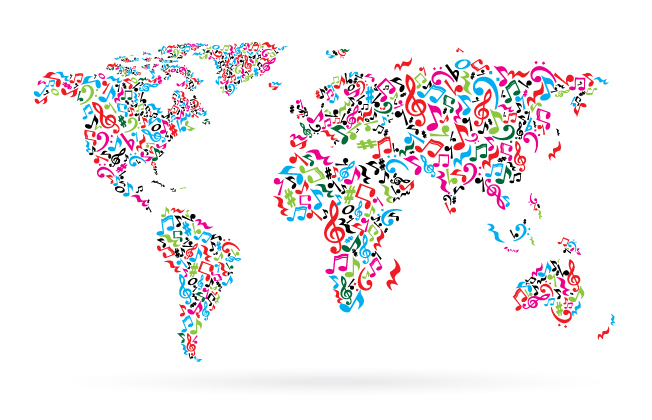

Globalization of Music: The Rise of Remote and Global Collaborations in Music Production
If we were to pinpoint one trend responsible for the rise of independent music in India, it would have to be the globalisation of technologies for music creation, consumption and distribution. Advancements in computing, coupled with the advent of the internet, began making their way to the Indian market in the early 1990s, allowing more Indians access to creative tools to make and share the music they love. Beyond incubating a local market for non-film music, these tools have grown to foster collaboration across continents, dissolving traditional barriers and building a global community of diverse talent.
For those of you who are new to the indie scene and curious about how it came to be in an industry saturated with Bollywoods and Tollywoods, we thought we would highlight three key factors responsible for putting homegrown artists on the map. Let’s go!
The Internet

This one is by far the most obvious, however, we still think it needs to be mentioned. Social media aside, the sheer amount of knowledge and talent accessible through the internet has been a key factor in boosting India’s homegrown musicianship (and listenership). The rise of online courses across sites like YouTube, for example, have brought music production tips and tricks to people without schools nearby to teach it. Online forums (Reddit included) have also offered budding creators advice and opportunities to share ideas, and collaborate without the constraints of international borders.
For instance, the internet has been crucial in connecting homegrown artists with Indian diasporic music communities in the west. This has been beneficial to the local scene by fusing genres and creating collaborative opportunities outside of the film business. It has also bolstered the gig economy by giving local producers and sound engineers opportunities to work with foreign artists on musical projects. Podcasts like ‘Maed In India’ and collaborative series like ‘Coke Studio’, are a product of this cultural exchange, putting Indian artists on the map for both local and foreign listeners.
Tools & Gear
Aside from the internet, access to cheap digital tools & music gear have also been a boon. The availability of Digital Audio Workstations like FL studio and Garageband, among others, have made high-quality music production accessible to everyone. Musical instruments and recording equipment (microphones, MiDi keyboards, etc.) have also gotten cheaper to buy and easier to acquire, meaning that artists no longer need to depend on professional studios to turn their ideas into finished tracks.
The same tools have enabled collaboration between borders. While session artistry has always been a commercial avenue for the musically talented in India, the concept of a home studio has enabled homegrown artists to lend their talents to people across the globe. Moreover, it has also given the Indian industry a bigger talent pool to source fresh ideas from for films, video games, advertisements and more!

Platformisation

For the longest time, artists in India have depended on the big record labels – Sony, T-Series, Saregama, etc. – to access local audiences in volumes. However, with the advent of music streaming platforms like Spotify & Gaana, as well as independent community platforms like Skillbox and Amplify, access to regional music fans has grown considerably. These developments have significantly lowered the barriers to entry for new artists by creating centralised platforms that connect musicians directly with music listeners.
The key benefit of music streaming has been the removal of the “middle man”. Distributors like Distrokid and Tunecore allow musicians to publish tracks directly to streaming platforms (for a fee or subscription), without the intervention of a record label. This, while not guaranteeing greater listenership to artists, has improved exposure, and allowed musicians greater control over the distribution of their work. There is also the added benefit of monetisation and revenue generation from streaming (although the viability of this avenue for emerging musicians is widely contentious).
Community platforms & artist incubation programmes have also been a boon. Skillbox, for instance, is an aggregator of live events and artists, allowing music venues to find artists for their events across genres and cities in India, and giving fans a place to access new events. Amplify Music India (AMI), on the other hand, offers published artists (those with published music) skill-building workshops that teach relevant industry skills like marketing, licensing and more. Consolidating expertise from across the country, AMI organises ‘Artist Residencies’ that bolster young talent with guidance from music market’s best and brightest.
Conclusion
Globalising Indian music has allowed for greater diversity in genres and styles, ushering in fresh ideas and greater scope for commercial growth. This has implications for both the local market and foreign audiences. Firstly, more international collaborations facilitated by online platforms infinitely increases the audience pool for artists to cater to. Secondly a greater artist pool boosts the local economy creating greater supply to meet growing talent demand. Lastly, the influx and outflux of cultures creates a breeding ground for fresh ideas, and, hopefully, musical innovation.


