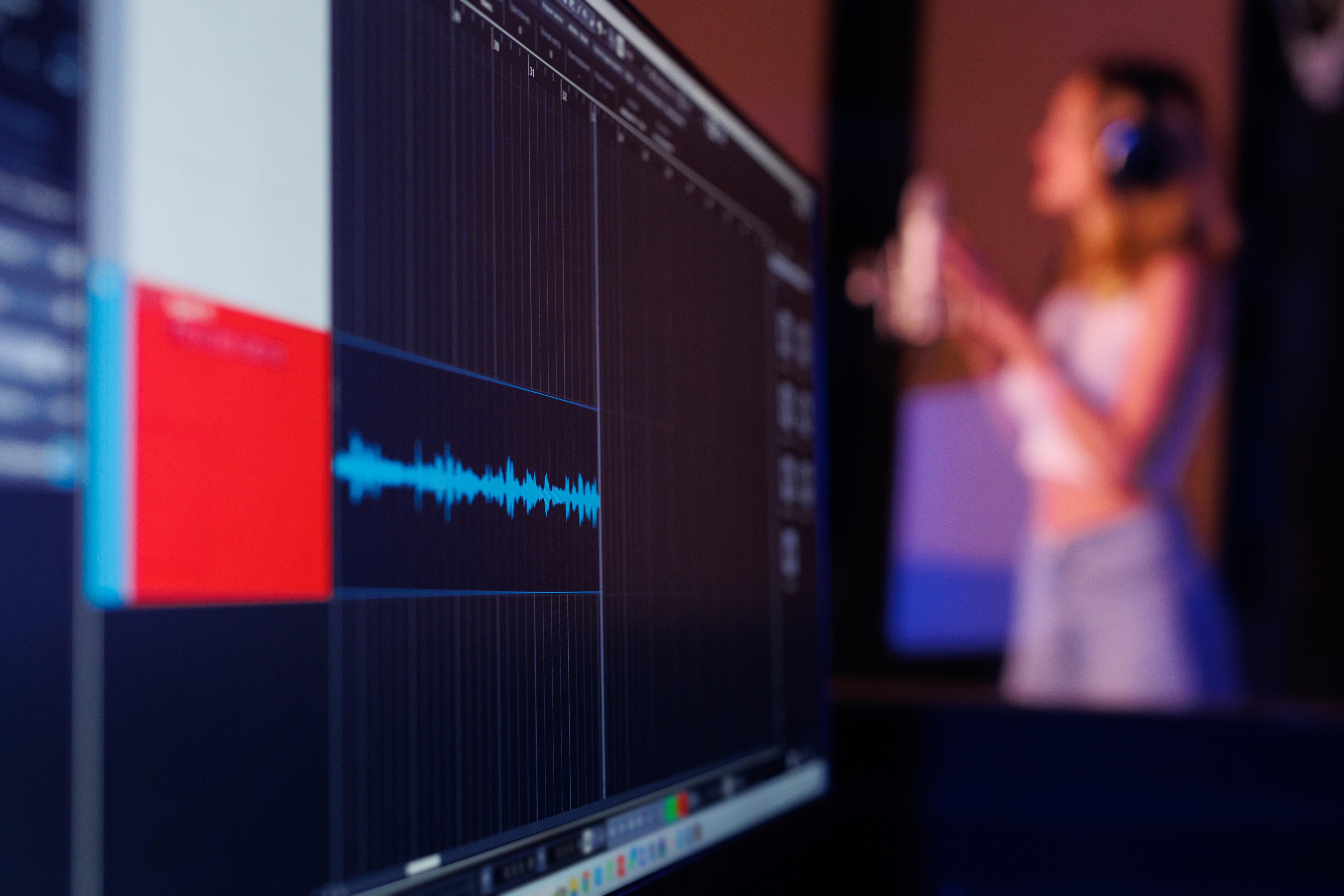

Home Studio Basics: Using Acoustics to Make Your Audio Sound Better
Have you ever taken your guitar to an empty room in your house, strummed a chord and thought – “that sounds rubbish!”?. If so, don’t worry because you’re definitely not alone when it comes to dealing with poor acoustics. Managing your recording space as a budding producer or sound engineer can be a daunting task, which is why we thought we’d share some useful tips to get you started.
Understanding Room Acoustics
Whether you’re trying to capture the intricate sound of a steel-string guitar or mix an entire orchestral ensemble, understanding the way sound behaves in a room will help you achieve the best possible sonic output. This is where the field of ‘Acoustics’, i.e. – the study of sound propagation within a fixed space – becomes important. For a given room, the way sound waves interact with various surfaces within the room is influenced by the room’s size, shape, and contents, and, so, manipulating these characteristics will impact how sounds, well, sound (pun intended).
Every room has a unique acoustic signature, influenced by its dimensions and the materials within it. Minor details, like the placement of furniture, can have a substantial impact on sound quality, so it’s crucial to identify these “bad actors” before you record or mix any audio. After all, If your room is poorly treated, you might encounter unwanted echoes or muddied frequencies that distort the original sound. For your convenience, we’ve highlighted key acoustic characteristics to look out for when fixing up your recording space:
Sound Reflections and Absorption
There are three primary ways sound can interact with a surface; it can be absorbed, reflected, or diffused. Spaces with hollow walls and hard floors are more likely to reflect sound, whereas softer surfaces, such as carpeted floors or pillows, are more likely to soften (i.e. – dampen) or diffuse (i.e. – spread evenly) sound. For recording purposes, it’s crucial to maximise the number of absorptive and diffusive surfaces present in order to minimise reflections. This ultimately helps avoid excessive echo, resonance and reverberation.
First-order reflections are particularly important to consider. These reflections – where sound waves initially bounce off surfaces like walls, floors, and ceilings – can interfere with the sound produced by speakers or instruments, creating a muddied or distorted audio signal. To manage them, make sure to cover your walls and any exposed surfaces (i.e. – furniture) with diffusers and acoustic panels (see pictures below) proportionate to the amount of reflection your room is producing. We’ve linked a video below to help you out.
Bollywood (and Reddit) has shown that it can be difficult to change public perceptions once they’ve been cemented. This is why branding, in effect, is actually the art of controlling the residual perception of something in the minds of your listeners. Doing this means having a consistent story, and a set of guiding principles to ensure that you can adapt to an evolving market and still stay true to yourself.
For example, if you’re a singer-songwriter that primarily writes love songs, think about how your public attitude, and visual and written communication (i.e. – content and aesthetic) complement your thematic and musical content. Also consider how changes to any one of these may impact your fans’ perception of you.

Low-Frequency Challenges and Speaker Placement
Low-frequency sound waves – those typically below 100 Hz, present unique challenges in a recording environment. These frequencies are difficult to manage because they tend to build up in certain areas of a room, causing bass-heavy spots or nulls that either accentuate or cancel out certain frequencies of sound. This can be particularly annoying when you’re recording or mixing tracks with a lot of “low-end” content. Addressing these inconsistencies can go a long way in getting you that perfect mix.
The first step to dealing with frequency variations across a room is to look at your speaker placement relative to the dimensions of your recording space. Speakers should, ideally, be placed equidistant from side walls to avoid creating an imbalanced sound field. Additionally, your listening position should be equidistant from both speakers such that you are seated in an equilateral triangle with the speakers. Identifying this “Sweet Spot” will prevent you from hearing unbalanced sound during playback or audio mixing.
Once you’ve adjusted your speaker placement, the next thing to do is counteract low-end inconsistencies with Bass Traps. These traps are typically placed in the corners of the room, where bass frequencies tend to accumulate and help absorb them so they don’t affect the sound that you hear. Identifying the location of these low-end concentrations will help you decide the appropriate treatment (materials, size, positioning, etc.). Here is another useful video to help you out.

The Role of Acoustic Prediction Software
To make optimising your recording space easier, acoustic prediction software such as Rational Acoustics SMAART and AFMG’s EASE can help you model how sound will behave in a given space before it is built. These tools can also be used in existing spaces to identify areas with dulls or inconsistencies so you can apply treatments and countermeasures appropriately. These tools can simulate sound reflections, absorption, and diffusion, providing valuable insights into how to treat your room for the best possible acoustic performance.
Conclusion
Understanding the science of sound and how acoustics influence recording quality is essential for getting the best out of your recording space. We hope that these tips save you some time and help you configure your bedroom studio or commercial recording space into the creative haven you’ve envisioned it to be! Happy mixing!


