

Having played and performed music for over three decades, I have always had my own ideas about how I feel music should be taught, especially the piano (my specialty) – deeply integrating aural skills with good technique and fluent note-reading. I have also had reasonable success using these approaches in my (limited) music teaching over the years.
It’s one thing to teach, even to teach really well purely by instinct – and quite another to teach with robust pedagogical frameworks, theories, concepts and tools at one’s disposal. Having such a framework helps to reflect and place different pedagogical approaches in context, including one’s own.
Even with decades of playing, performing, intermittent teaching and a deep passion for the subject, I still felt I needed to know more about this theoretical framework. The proverbial fish sort of knew it was in water, but was still finding its bearings.
That’s when a relatively new institute, the Future School of Performing Arts, Goa announced their PG Diploma in Music Education. It seemed just the right fit, with remote participation, a relevant curriculum and plenty of hands-on application. I signed up quite eagerly.

The journey has been fascinating. Understanding different learning theories, music pedagogy approaches, techniques and interdisciplinary connections enabled me to make connections with my previous knowledge of psychology and education, and to apply several of these concepts directly in my own teaching. Brainstorming in our virtual lecture sessions with my peers and faculty (also passionate music educators) helped to contextualise these concepts and bring them alive.
On my first encounter with curriculum design, I wondered where this subject had been all my life!
I particularly found backwards design thinking to be a handy filter. One needed to ask and answer three essential questions:
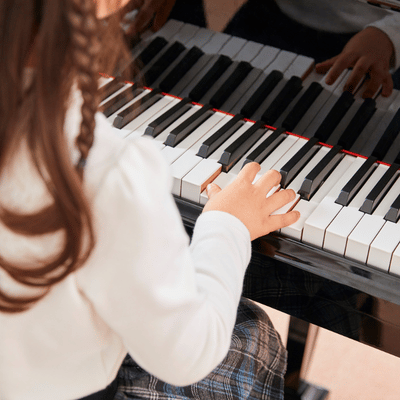
Better still, I was able to apply these principles to my summer programs, both for six-year-olds starting out on the piano, as well as for pre-teens collaborating on piano duets.
I could prioritise what I considered important – collaboration, peer learning and engagement, deeply understanding pitch and rhythm relationships, creating opportunities for self-correction, and making music meaningfully (rather than having to rely on external markers). To me, a duet where students fall out of sync and then manage to find their place together, speaks volumes more than a note-perfect rendition. The course empowered me to design my own assessments to reflect such criteria, emphasizing that such ensemble skills could also be meaningfully assessed using the right rubric.
The learnings in curriculum design enabled me to design courses representing my deepest convictions and values while aligning with Government-mandated frameworks such as the NEP and NHEQF.
I have always considered myself an exam-sceptic – whether in music or in school education. But the course on understanding and designing assessments provided me with a fresh perspective – that regardless of what one believes about exams, we teachers are always assessing our students, one way or another.
The essential questions then shift away from a simplistic “Exams: good or bad” framework and become more nuanced:
In this context, designing and stress-testing my own original assessments and rubrics for real-world music-related tasks gave me insight into the challenges that music exam boards, school boards, colleges, and universities face when called upon to assess music performance at scale.
Probably the most valuable part of the program has been the deep, regular, structured reflection that the Teaching Practice course requires. Maintaining a regular teaching journal, analysing our own teaching videos, discussing common challenges in course forums, analysing communication styles, navigating ethical dilemmas and classroom situations we face as music educators – all of these have been deeply enriching.
I was a music educator both before the course and now. I was passionate and curious about music and music education both before and now. I was giving it my best both before and now. But what has changed is this: I feel that studying this course has both inspired and enabled me to better engage in my work with the kind of reflexivity, criticality and sophistication that this noble discipline deserves.

Based in Pune, Dhruva Seshadri is a pianist and music educator with over twenty five years of performing experience. Following a successful 15-year career in the Indian Revenue Service, he pivoted to his lifelong passion for music education. To combine his practical experience with formal, cutting-edge pedagogical theory, Dhruva joined the first batch of the PG Diploma in Music Education at Future School of Performing Arts, Goa.


